
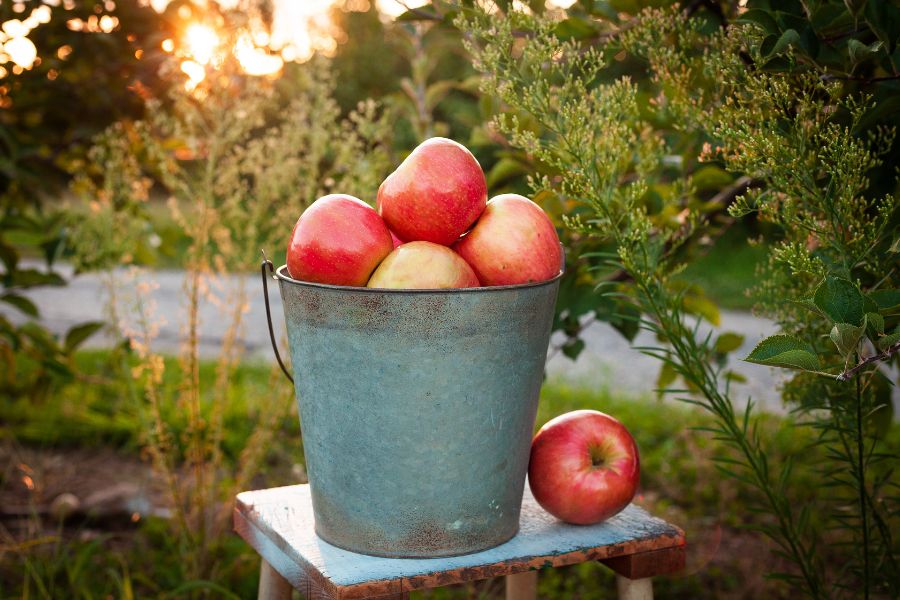
Sorting your apples is critical
Visiting a pick-your-own orchard is an autumn tradition for many families. Walking between rows of heavy-laden trees under crisp fall skies often leads to an overfilled wagon and several bushels of fresh fruit. However, the excitement of bringing home dozens of pounds of apples can quickly fade once you realize that room temperature is an orchard apple’s worst enemy. Within a week or two on a kitchen counter, firm, juicy fruit can turn dry, soft, and mealy.
Apples remain alive even after they are picked from the branch. They continue to respire, taking in oxygen and metabolizing stored starches into sugars before eventually breaking down completely. Learning how to slow this biological process is the secret to extending the life of your harvest for months. By controlling sorting, temperature, humidity, and airflow, you can enjoy homegrown fruit deep into winter.
Step 1: The Sorting Ritual and the Chemistry of Decay
Before putting a single apple away, you must sort the entire harvest. The familiar proverb “one bad apple spoils the bunch” is not just a metaphor—it is a botanical reality.
As apples ripen, they naturally synthesize and emit ethylene gas, an organic plant hormone that regulates fruit maturation. When an apple suffers a bruise, skin puncture, or stem tear, its respiration rate spikes, triggering a surge in ethylene production. This gas quickly diffuses into the surrounding air, signaling neighboring apples to accelerate their own ripening and decay cycles.
Examine every piece of fruit under good lighting:
-
Long-Term Storage Candidates: Select only completely unblemished specimens. They must have intact skins, no soft indentations, and ideally, their stems still firmly attached. Missing stems leave an open wound where fungal spores like blue mold (Penicillium expansum) can enter.
-
The “Eat First” Pile: Apples with bird pecks, bruises, insect damage, or broken skin should be separated immediately. These are perfectly fine for immediate consumption, applesauce, cider, or baking into pies, but they will rapidly rot if placed in storage.
Equally important: do not wash your apples. In the orchard, trees coat developing fruit with an epicuticular wax layer, often visible as a dull, whitish film called the “bloom.” This natural barrier repels water, prevents desiccation (internal moisture loss), and blocks airborne microbial pathogens. Rinsing apples under a tap strips away this protection and leaves residual moisture on the skin, creating an ideal breeding ground for fungus. Wash your fruit only immediately before slicing or eating it.
Step 2: The Environmental Trifecta (Temperature, Humidity, and Airflow)
To arrest an apple’s biological clock without freezing its cellular structure, you must manage three environmental variables:
Temperature
Orchard apples prefer cold storage, ideally between 30°F and 35°F (-1°C to 2°C). Every 10°F increase above this range roughly doubles the rate of respiration. At average room temperature (around 68°F), apples ripen up to ten times faster than they do in a cold cellar. However, you must avoid freezing temperatures. Because apples contain dissolved sugars, their freezing point sits slightly below pure water, around 28.5°F to 29°F (-1.7°C). If the temperature drops below this threshold, ice crystals rupture the cells, leaving you with mush when the fruit thaws.
Relative Humidity
Apples consist of roughly 85% water. If stored in dry winter air, moisture evaporates through microscopic pores in the peel, causing the skin to wrinkle and shrivel. The ideal storage environment maintains 90% to 95% relative humidity.
Airflow and Isolation
Apples absorb ambient aromas like sponges. Never store them directly next to pungent root vegetables such as onions, turnips, or garlic, or your fruit will take on an unpleasant savory taste. Furthermore, keep stored apples isolated from sensitive produce like leafy greens or carrots, which quickly yellow and turn bitter when exposed to ambient ethylene.
Practical Storage Methods
Depending on the volume of your harvest and the space you have available, choose the method that best matches your setup:
Storing in the Refrigerator
If you have picked one or two peck bags, your refrigerator’s crisper drawer is the most reliable option. Place the sorted apples into plastic bags with a few ventilation holes punched into the sides. The plastic locks in humidity to prevent shriveling, while the perforations allow excess ethylene to escape. Keep the crisper drawer setting turned to “high humidity.”
Storing Bulk Harvests (Cellars, Basements, and Garages)
If you have harvested bushels of fruit, your refrigerator will quickly run out of room. An unheated basement, root cellar, or insulated garage works well, provided the space stays consistently cold and above freezing.
-
Wrap Individually: Take sheets of unprinted newsprint, butcher paper, or standard brown kraft paper and wrap each apple loosely. This physical barrier ensures that if an undetected spore causes one apple to decay, the moisture and rot cannot directly contact adjacent fruit.
-
Pack Shallow: Arrange the wrapped apples in shallow, slatted wooden crates, shallow cardboard boxes, or wire baskets. Limit packing to one or two layers deep so that weight does not crush the bottom tier.
-
Elevate and Ventilate: Elevate crates several inches off damp concrete floors using wooden blocks or pallets to promote air circulation.
-
Maintain Moisture: If your storage room is dry, drape damp burlap over the tops of the crates or place shallow pans of water on the floor nearby to boost ambient moisture levels. Inspect your stash every two to three weeks, immediately removing any fruit that begins to soften.
Choosing the Right Cultivar
Not all apples share the same biochemical makeup. Early-season varieties that ripen in late August and early September—such as McIntosh, Gala, and Paula Red—typically feature thinner skins and higher acid-to-sugar conversions that lead to early softening. These are best eaten fresh or preserved within a month.
Late-season varieties harvested in October—including Honeycrisp, Granny Smith, Fuji, Pink Lady, Rome, and Northern Spy—possess thick peels, dense cell structures, and higher natural acid contents that naturally resist breakdown. When properly stored in cold, humid conditions, these hearty winter varieties will reliably hold their signature crunch until the first signs of spring.